

Overcome logistics workforce shortages and errors
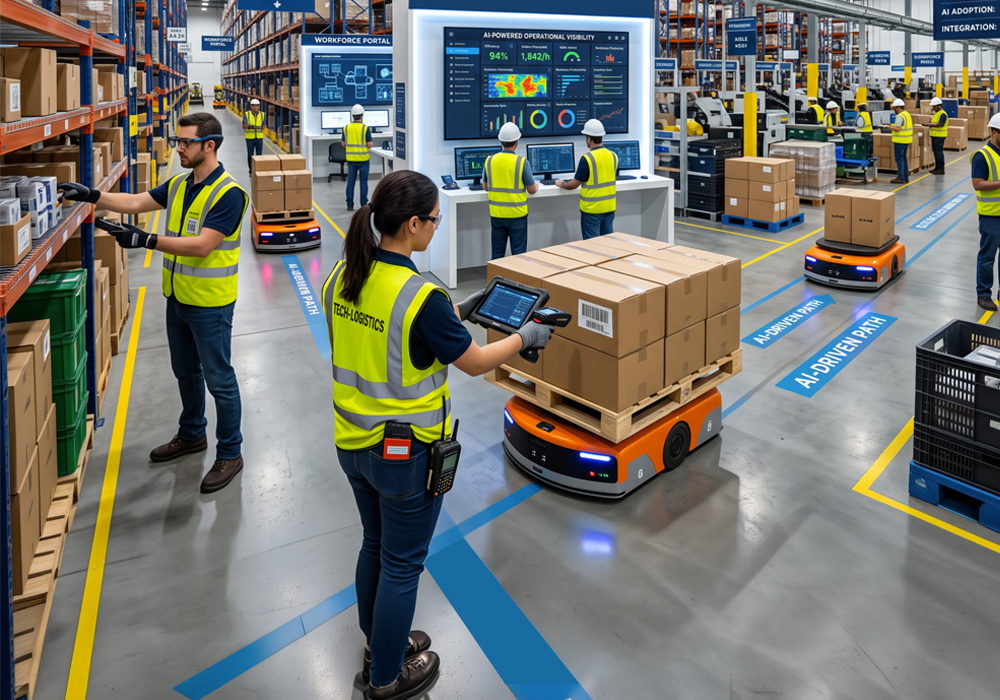

The logistics industry is under increasing pressure to move freight faster, reduce operational costs, and deliver exceptional customer experiences despite persistent labor shortages and increasingly complex supply chains.
While many organizations have invested in Transportation Management Systems (TMS), Warehouse Management Systems (WMS), ERP platforms, IoT devices, and carrier technologies, many still struggle with disconnected data, manual workflows, and limited operational visibility. These challenges create costly mistakes, slow decision-making, and make it difficult to successfully adopt artificial intelligence.
The organizations seeing the greatest success are not simply implementing AI. They are first building a trusted data foundation that allows AI, automation, and analytics to deliver measurable business value.
This article explains why data management has become the foundation of modern logistics operations and how organizations can leverage AI to reduce costs, improve operational efficiency, and overcome workforce shortages.
Why logistics workforce shortages persist
Labor shortages continue because logistics operations have become more complex while experienced workers remain difficult to replace. Organizations increasingly rely on automation, AI, and connected systems to improve productivity without significantly expanding headcount.

Across transportation, warehousing, and fulfillment operations, employees are expected to process larger shipment volumes with fewer resources.
Common challenges include:
- Manual shipment tracking
- Disconnected warehouse and transportation systems
- Limited visibility into inventory movement
- Repetitive administrative tasks
- Delayed exception management
- Increasing customer expectations for real-time updates
These challenges often force employees to spend valuable time searching for information instead of solving operational problems.
Why data matters for AI in logistics
AI is only as effective as the data it receives. Clean, connected, governed data enables AI to generate accurate insights, automate workflows, and improve logistics decision-making.
Many organizations assume AI implementation begins by purchasing an AI platform.
In reality, successful AI initiatives begin with data.
If shipment information exists in multiple disconnected systems—or if operational data is incomplete, duplicated, or outdated—AI models cannot produce reliable recommendations.
Strong data management provides:
- Consistent operational data
- Reliable shipment visibility
- Accurate inventory information
- Trusted reporting
- Faster analytics
- Better forecasting
- Higher confidence in AI-generated recommendations
Without reliable data, automation often creates more confusion rather than greater efficiency.
The hidden cost of poor logistics data
Organizations often underestimate how expensive poor data quality can become.
Disconnected information creates problems throughout the supply chain, including:
Transportation
- Incorrect shipment status
- Missed delivery commitments
- Higher transportation costs
- Carrier disputes
Warehouse operations
- Inventory inaccuracies
- Picking errors
- Overstocking
- Stock shortages
Customer service
- Increased call volume
- Delayed responses
- Lower customer satisfaction
- Lost revenue opportunities
Executive decision-making
- Conflicting reports
- Delayed planning
- Poor forecasting
- Limited operational insight
Many of these issues originate from inconsistent data rather than operational failures.
How AI helps reduce costly mistakes
AI improves logistics by identifying patterns, predicting disruptions, automating repetitive work, and helping employees make faster, more accurate decisions.
When powered by trusted operational data, AI can help organizations:
Predict shipment delays: AI continuously evaluates weather, traffic, historical carrier performance, and operational trends to identify potential delays before they impact customers.
Improve inventory planning: Machine learning models forecast inventory demand using purchasing history, seasonality, and customer trends.
Automate manual workflows: Routine administrative tasks such as shipment updates, invoice validation, documentation, and notifications can be automated.
Detect operational anomalies: AI identifies unusual shipment activity, inventory discrepancies, and potential fraud more quickly than manual processes.
Improve customer communications: AI-powered workflows automatically notify customers about shipment changes and expected delivery times.
Why system integration is essential for AI success
Most logistics organizations operate dozens of business applications.
These may include:
- ERP systems
- Transportation Management Systems (TMS)
- Warehouse Management Systems (WMS)
- Fleet management platforms
- Carrier portals
- IoT sensors
- GPS tracking systems
- Customer portals
- Business intelligence platforms
When these systems cannot communicate effectively, operational visibility disappears.
Modern integration strategies connect operational data into a unified ecosystem that enables AI to analyze the entire supply chain instead of isolated systems.
Organizations that prioritize integration gain:
- Real-time operational visibility
- Faster reporting
- Improved decision-making
- Reduced manual data entry
- Better customer experiences
- Greater AI readiness
Building an AI-ready logistics organization
Successful AI adoption rarely begins with large-scale AI deployments.
Instead, leading organizations follow a structured modernization approach.
Step 1: Assess current operations
Evaluate:
- Operational bottlenecks
- Manual workflows
- Data quality
- Technology maturity
- Security risks
Step 2: Connect business systems
Integrate operational platforms to eliminate data silos and improve visibility across transportation, warehousing, finance, and customer operations.
Step 3: Establish data governance
Create standards for:
- Data ownership
- Data quality
- Security
- Accessibility
- Compliance
Step 4: Automate high-value processes
Focus first on repetitive tasks that generate measurable productivity improvements.
Examples include:
- Shipment status updates
- Inventory reconciliation
- Customer notifications
- Invoice processing
- Operational reporting
Step 5: Scale AI across the organization
Once trusted data and automation are established, organizations can expand AI into predictive analytics, intelligent routing, workforce optimization, and operational forecasting.
Improve productivity with existing teams
One of the greatest advantages of AI is its ability to amplify the effectiveness of existing employees.
Rather than replacing workers, AI enables logistics teams to focus on higher-value activities.
Examples include:
- Customer relationship management
- Exception handling
- Strategic planning
- Continuous process improvement
- Carrier optimization
- Supply chain collaboration
Employees spend less time performing repetitive administrative work and more time solving complex operational challenges.
Secure AI starts here
AI systems process large volumes of operational and customer data.
Without strong cybersecurity, organizations expose themselves to:
- Ransomware
- Data breaches
- Unauthorized access
- Regulatory violations
- Operational disruption
AI adoption should always be accompanied by:
- Identity and access management
- Zero Trust security principles
- Continuous monitoring
- Threat detection
- Vulnerability management
- Secure cloud architecture
Protecting operational data is essential for maintaining customer trust and business continuity.
Modernize logistics with confidence
Successful AI adoption requires more than technology. It requires a connected strategy that aligns infrastructure, cybersecurity, data, automation, and operational processes.
Claro helps logistics organizations build that foundation through integrated services that include:
Data engineering & AI readiness
Transform disconnected operational data into trusted, AI-ready information that supports analytics, automation, and intelligent decision-making.
Systems integration
Connect ERP, TMS, WMS, cloud platforms, IoT devices, and operational applications to create a unified logistics ecosystem.
Intelligent automation
Automate repetitive workflows, improve operational efficiency, and reduce manual effort through AI-driven process automation.
Cybersecurity services
Protect logistics environments with managed security, vulnerability management, threat monitoring, Zero Trust strategies, and compliance-focused security services.
Cloud & infrastructure modernization
Improve scalability, resilience, and operational performance through modern cloud infrastructure and secure network connectivity.
Nearshore talent extension
Expand IT and operational capabilities with experienced nearshore professionals who help organizations accelerate modernization initiatives while addressing workforce shortages.
By combining these capabilities, Claro helps logistics organizations reduce operational complexity, improve visibility, strengthen resilience, and create a practical path toward AI adoption.
Create a smarter logistics operation
AI has the potential to transform logistics operations, but technology alone is not enough. Organizations must first establish a strong data foundation, connect critical systems, and modernize operational processes to unlock meaningful business value.
By investing in data management, integration, automation, and cybersecurity, logistics providers can reduce costly mistakes, improve operational visibility, address workforce shortages, and create a scalable foundation for long-term innovation.
Rather than treating AI as a standalone initiative, successful organizations view it as the next step in a broader digital transformation strategy—one built on trusted data, connected operations, and continuous improvement.
Take the next step toward smarter logistics.
If disconnected systems, manual processes, or inconsistent data are limiting your logistics performance, Claro can help.
Our logistics specialists work with organizations to assess operational maturity, modernize technology, connect critical systems, strengthen cybersecurity, and develop practical AI strategies that deliver measurable business outcomes.
Schedule a consultation with Claro to discover how your organization can reduce costs, improve visibility, and accelerate AI adoption with confidence.
.png)
FAQ
Can AI solve logistics workforce shortages?
AI cannot completely replace workers, but it significantly improves productivity by automating repetitive tasks, improving operational visibility, and helping employees make faster, more informed decisions.
Why does AI require good data?
AI depends on accurate, complete, and connected data. Poor data quality leads to unreliable predictions, inaccurate reporting, and ineffective automation.
What logistics processes benefit most from AI?
Organizations commonly use AI for shipment tracking, demand forecasting, route optimization, warehouse operations, predictive maintenance, customer communications, inventory management, and operational analytics.
What is an AI-ready data foundation?
An AI-ready foundation consists of connected systems, governed data, consistent information, strong cybersecurity, and modern infrastructure that allows AI solutions to operate accurately and reliably.
How should organizations begin AI adoption?
Most organizations should begin with an operational assessment that identifies data gaps, integration challenges, manual workflows, and modernization priorities before implementing AI technologies.
Insights
Stay up to date on pivotal trends in information technology that are set to define the future of business. Subscribe to our blog today!

.jpg)
.png)

.png)




Our Core Capabilities

INFRASTRUCTURE
& CONNECTIVITY
connectivity and cloud.
.svg)

SECURITY

DIGITAL INNOVATION
& HYPER-AUTOMATION

INTELLIGENT
INSIGHTS & AI

TALENT
EXTENSION
