

Improve operational performance with AI-powered vision
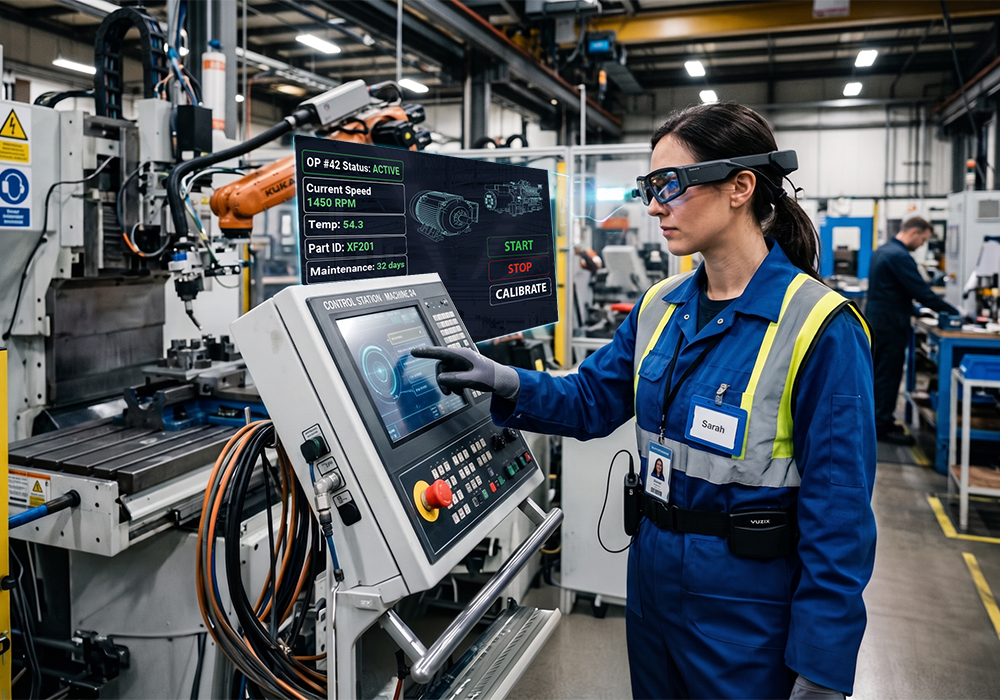

Artificial intelligence is transforming how organizations collect, analyze, and act on operational data. While much of the conversation focuses on generative AI, predictive analytics, and intelligent automation, one of the most significant advances is happening at the physical edge of the enterprise through AI-powered vision systems.
Every day, organizations generate vast amounts of visual data from production lines, warehouses, retail stores, distribution centers, hospitals, transportation networks, utilities, and critical infrastructure. For years, much of that information went unused because reviewing video and images manually was time-consuming, inconsistent, and impossible to scale. AI-powered vision changes that by transforming cameras from passive recording devices into intelligent systems that continuously analyze visual information, recognize patterns, detect anomalies, and generate actionable insights in real time.
The impact extends well beyond surveillance. Organizations are using computer vision to improve quality, increase throughput, strengthen workplace safety, reduce operational costs, and make faster, more informed decisions. As investments in automation and AI continue to accelerate, AI-powered vision is emerging as one of the highest-value technologies supporting digital transformation initiatives across nearly every industry.
What are AI-powered vision systems?
AI-powered vision systems use cameras, computer vision, and machine learning to automatically interpret visual information, identify objects and events, detect anomalies, and generate real-time operational insights without continuous human monitoring.
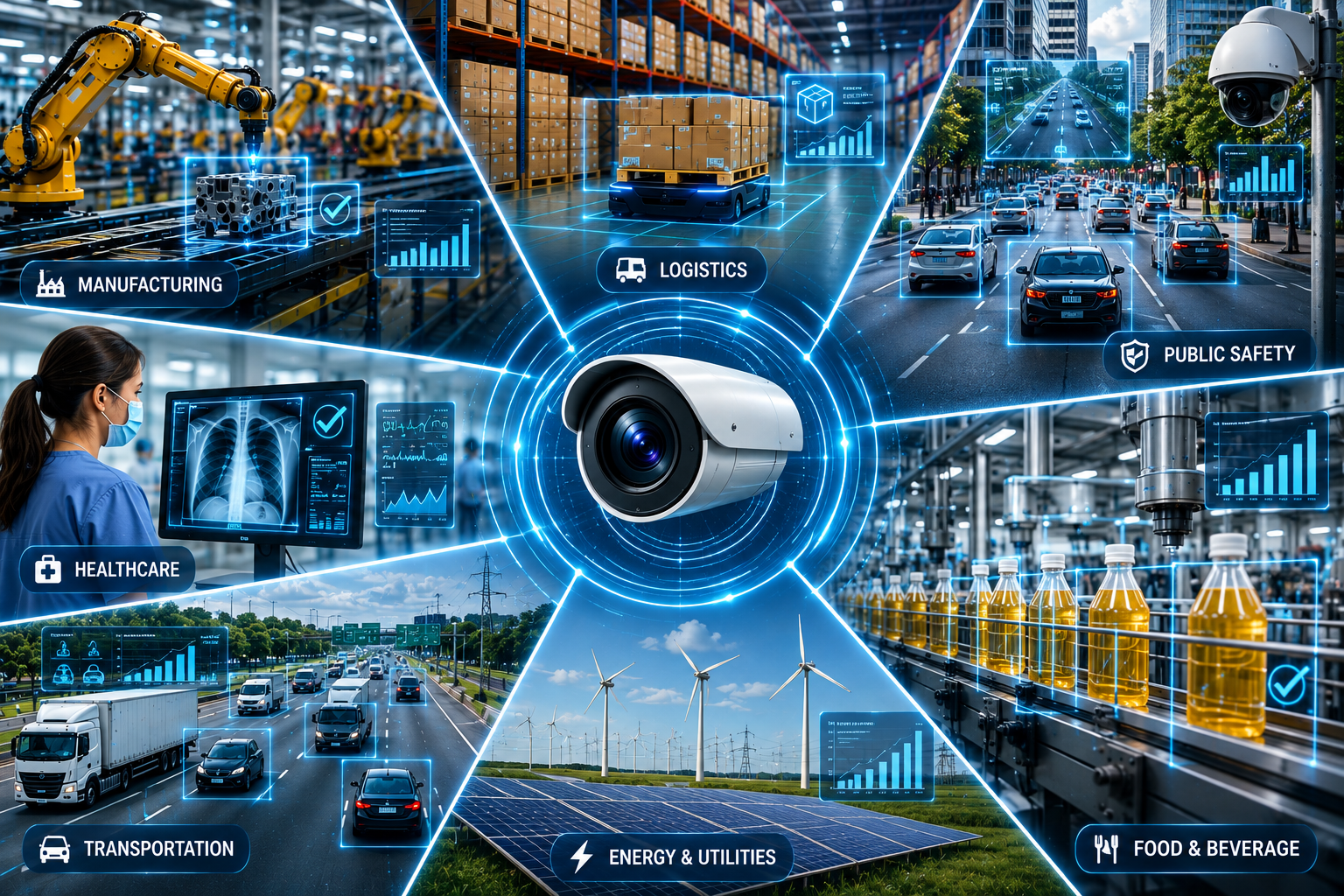
A modern AI-powered vision solution typically combines several technologies to deliver these capabilities, including:
- High-resolution cameras
- Edge computing
- Deep learning models
- Computer vision algorithms
- Real-time analytics
- Cloud-based reporting
- Operational dashboards
- Automated alerts
Instead of relying on employees to monitor video feeds or manually inspect products throughout the day, AI performs these repetitive tasks continuously, consistently, and at a scale that simply isn't possible through manual processes alone.
This allows employees to focus their time on investigation, decision-making, and higher-value work that requires human expertise.
Why are organizations investing in AI vision?
Organizations are investing in AI vision to improve inspection accuracy, increase productivity, reduce operational costs, strengthen safety, and gain real-time visibility into business operations.
Today's operational leaders face growing pressure to do more with fewer resources. Labor shortages, rising customer expectations, stricter regulatory requirements, and increasing quality standards have made traditional inspection methods more difficult to sustain. At the same time, businesses are expected to improve efficiency without sacrificing quality or increasing costs.
Manual visual inspections struggle to keep pace with these demands. Even the most experienced employees become fatigued after reviewing thousands of products or hours of video, making inconsistencies and missed defects inevitable. As inspection quality declines, production slows, errors increase, and operational bottlenecks begin to emerge.
AI-powered vision addresses these challenges by automating repetitive visual tasks while providing continuous monitoring across facilities, production lines, warehouses, and operational environments. Rather than replacing employees, AI extends their capabilities by identifying only the events that require human attention, allowing teams to focus on higher-value activities that depend on judgment, collaboration, and problem-solving.
Organizations commonly deploy AI vision to:
- Improve inspection accuracy
- Reduce production defects
- Increase throughput
- Detect operational issues earlier
- Reduce downtime
- Improve worker safety
- Strengthen regulatory compliance
- Improve inventory visibility
- Accelerate decision-making
- Lower operational costs
Beyond automating inspections, AI vision provides organizations with continuous operational awareness. Instead of reacting to problems after they occur, leaders gain real-time visibility into what's happening across their operations, enabling faster responses and more proactive decision-making.
Improve operational accuracy
AI vision systems improve operational accuracy by consistently detecting defects, identifying anomalies, monitoring compliance, validating processes, and eliminating many of the inconsistencies associated with manual inspections.
One of AI's greatest advantages is consistency. Unlike human inspectors, AI does not become distracted or fatigued after reviewing thousands of products or monitoring hours of video. Every image is evaluated using the same criteria, helping organizations maintain a level of inspection quality that is difficult to achieve through manual processes alone.
AI-powered vision can identify a wide range of operational issues, including:
- Missing product components
- Surface scratches
- Packaging defects
- Label verification errors
- Incorrect assembly
- Personal protective equipment (PPE) compliance
- Safety violations
- Equipment abnormalities
- Inventory discrepancies
Because inspections occur continuously rather than at scheduled intervals, organizations detect issues much earlier in the production process. Defects can often be identified before products move downstream, while equipment issues and safety concerns can be addressed before they become larger operational problems. Early detection not only improves quality but also reduces the cost of corrective action by preventing defects, delays, and unnecessary rework.
Increase output without compromise
AI-powered vision systems enable organizations to increase production speed while maintaining high quality by performing continuous, real-time inspections throughout the production process.
Operational leaders have traditionally viewed production speed and quality as competing priorities. Increasing throughput often meant reducing inspection time, while maintaining rigorous quality standards could slow production and create bottlenecks. AI vision helps eliminate that tradeoff by integrating quality verification directly into production workflows.
Rather than relying on manual quality checks at the end of a production line, AI continuously evaluates products as they move through manufacturing. This allows organizations to identify issues immediately, make corrections earlier, and prevent defects from progressing through downstream processes.
Organizations using AI-powered vision often achieve measurable improvements by:
- Increasing production speed
- Reducing inspection bottlenecks
- Minimizing rework
- Lowering scrap rates
- Improving first-pass yield
- Reducing production interruptions
Because quality checks become part of the production process rather than a final checkpoint, organizations improve efficiency while maintaining the high standards customers and regulators expect. The result is a manufacturing operation that is both faster and more resilient.
AI vision across industries
AI-powered vision delivers value across industries by improving quality, safety, operational visibility, compliance, and decision-making through real-time visual intelligence.
One of the greatest strengths of AI-powered vision is its versatility. Although the underlying technology remains the same, organizations apply it in very different ways depending on their operational goals. Whether the objective is reducing manufacturing defects, improving warehouse efficiency, monitoring infrastructure, or enhancing patient safety, AI vision provides actionable insights that help organizations operate more effectively.
Manufacturing
Manufacturers use AI-powered vision to automate quality inspections, verify assembly processes, detect product defects, monitor equipment, support predictive maintenance initiatives, improve worker safety, and generate production analytics. These capabilities help reduce defects, increase throughput, lower scrap rates, and provide greater visibility into manufacturing performance.
Logistics and distribution
Distribution centers use AI vision to monitor package movement, validate loading accuracy, track inventory, optimize dock operations, improve trailer utilization, monitor warehouse safety, and manage vehicle traffic. By providing continuous visibility across warehouse operations, AI helps organizations accelerate fulfillment, reduce shipping errors, improve inventory accuracy, and increase labor efficiency.
Retail
Retail organizations deploy AI-powered vision to monitor shelf inventory, analyze customer traffic patterns, optimize checkout experiences, prevent loss, and manage queues more effectively. These capabilities improve merchandising decisions, enhance customer experiences, reduce shrinkage, and ultimately contribute to stronger sales performance.
Healthcare
Healthcare providers increasingly rely on AI vision to support patient monitoring, track critical assets, optimize workflows, improve facility management, verify PPE compliance, and automate pharmacy operations. Together, these applications improve patient safety, strengthen compliance efforts, accelerate clinical workflows, and help healthcare organizations make more efficient use of available resources.
Energy and utilities
Energy providers and utility organizations use AI-powered vision to perform remote asset inspections, monitor infrastructure, improve worker safety, detect environmental risks, manage vegetation, and identify equipment damage before failures occur. These capabilities reduce the need for manual field inspections while improving operational resilience and helping organizations maintain critical infrastructure more efficiently.
Operational efficiency beyond automation
AI-powered vision improves operational efficiency by reducing manual inspections, accelerating workflows, optimizing resource allocation, detecting issues earlier, and providing real-time insights that enable faster, more informed business decisions.
Many organizations initially invest in AI-powered vision to automate repetitive inspection tasks. While automation often delivers immediate gains in speed and consistency, the technology's long-term value lies in its ability to generate continuous operational intelligence. Every camera becomes another source of enterprise data, providing real-time visibility into how work is performed across facilities, production lines, warehouses, and field operations.
Rather than relying solely on historical reports or manual observations, operational leaders gain immediate insight into emerging trends, workflow inefficiencies, and process deviations as they occur. This enables teams to respond proactively instead of reacting after problems have already affected production, customer service, or profitability.
Organizations benefit from enhanced:
- Process visibility
- Performance analytics
- Trend identification
- Bottleneck detection
- Capacity analysis
- Workforce insights
- Operational benchmarking
As visual data becomes part of day-to-day decision-making, organizations gain a clearer understanding of operational performance and can continuously refine processes to improve efficiency, reduce waste, and support long-term business growth.
Accelerate digital transformation
AI-powered vision delivers the greatest business value when integrated with enterprise applications, operational technologies, and broader digital transformation initiatives.
Computer vision should not be viewed as a standalone technology investment. Instead, it should be treated as another source of operational intelligence that complements existing business systems and helps organizations make faster, data-driven decisions. When visual insights flow directly into enterprise platforms, organizations can automate workflows, improve visibility, and accelerate decision-making across the business.
Modern organizations increasingly integrate AI-powered vision with:
- Enterprise Resource Planning (ERP) platforms
- Manufacturing Execution Systems (MES)
- Warehouse Management Systems (WMS)
- Transportation Management Systems (TMS)
- Industrial IoT platforms
- Enterprise data platforms
- Business intelligence tools
- Predictive analytics platforms
These integrations create a connected operational ecosystem where visual intelligence becomes another trusted enterprise data source. Rather than simply recording activity, AI-powered vision helps organizations understand what is happening, why it is happening, and how they should respond in real time.
As organizations mature their AI strategies, computer vision increasingly serves as the bridge between physical operations and digital intelligence, helping transform disconnected processes into connected, data-driven workflows.
Measure AI vision ROI
Organizations measure the return on AI-powered vision by tracking improvements in inspection accuracy, throughput, defect reduction, labor productivity, operational visibility, workplace safety, and regulatory compliance.
One of the first questions executives ask is whether AI-powered vision will generate measurable business value. While results vary based on implementation and operational goals, organizations consistently evaluate success using key performance indicators tied to productivity, quality, efficiency, and risk reduction.
Common performance improvements include:
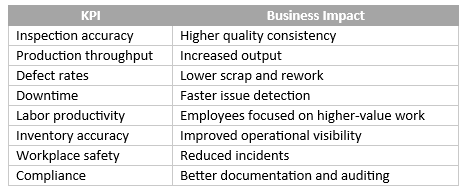
Because these improvements can be measured using operational KPIs, organizations are able to demonstrate tangible business outcomes rather than relying on anecdotal evidence. Over time, these incremental gains often compound into significant improvements in productivity, profitability, and customer satisfaction.
Separating AI vision fact from fiction
Organizations considering AI-powered vision often encounter misconceptions that can delay adoption. In reality, today's AI vision platforms are designed to augment existing operations rather than replace employees or require a complete technology overhaul.
"AI will replace our workforce."
In most deployments, AI complements employees rather than replacing them. By automating repetitive visual inspections, organizations free employees to focus on higher-value responsibilities such as decision-making, problem-solving, process improvement, and customer engagement.
"Computer vision is only for manufacturers."
Although manufacturing has been an early adopter, virtually any organization that depends on visual information can benefit from AI-powered vision. Warehouses, retailers, hospitals, utilities, transportation providers, airports, campuses, municipalities, and countless other organizations use computer vision to improve operational performance.
"We have to replace our existing cameras."
Many modern AI-powered vision platforms integrate with existing IP camera infrastructure, allowing organizations to build intelligent analytics on top of previous investments instead of replacing their entire surveillance environment.
Keys to AI vision success
Organizations achieve the greatest long-term success when AI-powered vision initiatives begin with clearly defined business objectives instead of focusing solely on technology. A phased implementation strategy helps organizations demonstrate value quickly while establishing a scalable foundation for future expansion.
Recommended best practices include:
- Identify high-value inspection processes.
- Prioritize measurable operational outcomes.
- Integrate AI vision with existing business systems.
- Train models using representative operational data.
- Continuously monitor AI performance.
- Expand deployments incrementally.
- Establish governance for AI and data management.
- Measure ROI using operational KPIs.
Organizations that view AI-powered vision as part of a broader operational intelligence strategy often realize greater long-term value than those pursuing isolated automation projects. By aligning computer vision with enterprise data, workflow automation, and continuous improvement initiatives, businesses create a stronger foundation for sustainable digital transformation.
The next evolution of AI vision
The next generation of AI-powered vision will combine predictive analytics, multimodal AI, digital twins, and autonomous decision support to deliver even greater operational intelligence.
Computer vision is rapidly evolving beyond object recognition and anomaly detection. Emerging capabilities will enable organizations not only to understand what is happening but also to predict future outcomes and recommend corrective actions before operational issues occur.
Future innovations include:
- Autonomous operational decision support
- Predictive visual analytics
- Digital twin integration
- Multimodal AI
- Natural language interaction with video
- Generative AI summaries of operational events
- Cross-site performance benchmarking
- Real-time process optimization
As these technologies mature, AI-powered vision will become an increasingly important component of enterprise AI strategies, helping organizations build intelligent, connected operations that can adapt more quickly to changing business conditions.
Power the future of your logistics operation
AI-powered vision is fundamentally changing how organizations monitor, analyze, and optimize operations. By transforming cameras from passive recording devices into intelligent sources of operational insight, businesses can improve quality, increase throughput, reduce costs, strengthen workplace safety, and make faster, data-driven decisions across the enterprise.
Its true value extends beyond automating inspections. When integrated with enterprise platforms, operational technologies, and AI-driven analytics, computer vision becomes a foundational component of a connected digital ecosystem. Visual intelligence flows directly into business processes, helping organizations improve operational awareness, automate workflows, and continuously optimize performance.
As AI, IoT, and enterprise data platforms become increasingly interconnected, AI-powered vision will play an even greater role in digital transformation. Organizations that invest today are not simply improving inspection processes—they are building an intelligent operational foundation capable of supporting continuous innovation, data-driven decision-making, and long-term competitive advantage.
.png)
FAQ
What is an AI-powered vision system?
An AI-powered vision system combines cameras, computer vision, and machine learning to automatically analyze visual information, identify patterns, detect anomalies, and generate actionable operational insights in real time.
How does AI vision improve operational efficiency?
AI-powered vision automates repetitive inspections, reduces manual effort, identifies operational issues earlier, improves workflow visibility, and enables faster, more informed business decisions through continuous monitoring.
Which industries benefit from AI-powered vision systems?
Manufacturing, logistics, retail, healthcare, transportation, utilities, construction, energy providers, public sector organizations, and many other industries use AI-powered vision to improve operational performance and decision-making.
Can AI-powered vision work with existing camera systems?
Yes. Many AI-powered vision platforms integrate with existing IP camera infrastructure, allowing organizations to enhance current investments without replacing their entire camera environment.
Is AI-powered vision only used for quality inspection?
No. Organizations also use AI-powered vision for workplace safety, inventory management, predictive maintenance, asset monitoring, regulatory compliance, security, workflow optimization, and customer experience improvements.
Insights
Stay up to date on pivotal trends in information technology that are set to define the future of business. Subscribe to our blog today!

.jpg)
.png)

.png)





Our Core Capabilities

INFRASTRUCTURE
& CONNECTIVITY
connectivity and cloud.
.svg)

SECURITY

DIGITAL INNOVATION
& HYPER-AUTOMATION

INTELLIGENT
INSIGHTS & AI

TALENT
EXTENSION
